Charcot-Marie-Tooth disease (CMT) is a rare inheritable peripheral neuropathy affecting about 1 in 2500 people, or an estimated three million individuals worldwide. More broadly, CMT is a heterogeneous group of inheritable sensory and motor peripheral neuropathies, axonopathies, myelinopathies, and neuronopathies. Clinically, CMT is a multisystem neuromuscular disease. Medically, it is one of the most complex diseases to understand. For those who have CMT, the disease is intrusive, unrelenting, often debilitating, unforgiving, and, albeit very rare, can sometimes be fatal.
CMT gets its name from the three doctors who first described it in 1886: Jean-Martin Charcot (1825-1893), Pierre Marie (1853-1940), both from France, and Howard Henry Tooth (1856-1925) from England. In its infancy, CMT was described as a disease that causes lower-leg muscle weakness and atrophy, known as peroneal muscle atrophy. Over time, CMT revealed itself to be profoundly more diverse, with effects far beyond the lower legs. Today, CMT refers to any peripheral neuropathy that has a genetic cause, even if the specific genetic cause is unknown.
CMT can cause breathing problems, and when it does, it causes a very specific kind of respiratory impairment called, “Neuromuscular-Induced Respiratory Muscle Weakness.” In CMT, this is referred to as CMT-induced neuromuscular respiratory muscle weakness, which can be shortened to “CMT-related respiratory muscle weakness.” Rather than affecting lung and airway tissues, this type of respiratory impairment is caused by a weakening of the muscles used for breathing. In CMT, the breathing muscles can become weakened as a consequence of the effects of the disease on the nerves that control these muscles. Just as the muscles of the lower legs, feet, and hands can become weakened in CMT, so to can the muscles used for breathing.
For reasons not well understood, not every person with CMT will develop breathing muscle weakness. True to CMT, those who do can experience varying degrees of severity and progression over time.
Just because somebody with CMT develops respiratory symptoms does not necessarily mean CMT is the cause. There could be other causes. Properly identifying the cause is essential for effective treatment, as the various types of respiratory impairment are treated differently from one another.
This page provides a general overview of CMT-related respiratory muscle weakness and compares it to other types of respiratory disease. The information presented is for informational purposes only and is not intended to serve as a diagnostic tool or to replace the advice of a qualified healthcare provider.
Your Breathing Can Be Treated
CMT-related respiratory muscle weakness shows a restrictive pattern on PFT because of hypoinflation, but this pattern can look similar to other breathing problems that have completely different causes. And while CMT can affect the breathing muscles, this is rare. Most people with CMT will never develop breathing muscle weakness at all.
Because of that, if someone who has CMT develops breathing symptoms, it is essential to determine whether those symptoms are actually coming from CMT or from something else entirely. Different causes require different treatments, and missing a non-CMT respiratory issue can lead to the wrong treatment and worsening symptoms.
There are no disease-modifying treatments for CMT yet, but CMT-related breathing issues can be treated and managed when they occur. When the breathing muscles are the source of the problem, the right support can make a real difference in sleep, energy, and overall health. And when the symptoms come from another cause, identifying that early is just as important.
What works well for one person may not be the best fit for someone else, but no one with CMT should feel like they have to struggle through breathing problems alone. Effective treatment options do exist, and with the right team and the right diagnosis, breathing can get easier.
Explore More
The Dorsal Root
More From The Dorsal Root
When Medicine Lost Its Compass
Evidence failed not because it was wrong, but because it was weaponized. I lived the downstream effects of that failure for more than a decade. This is what happens when medicine forgets that data always ends in a human being.
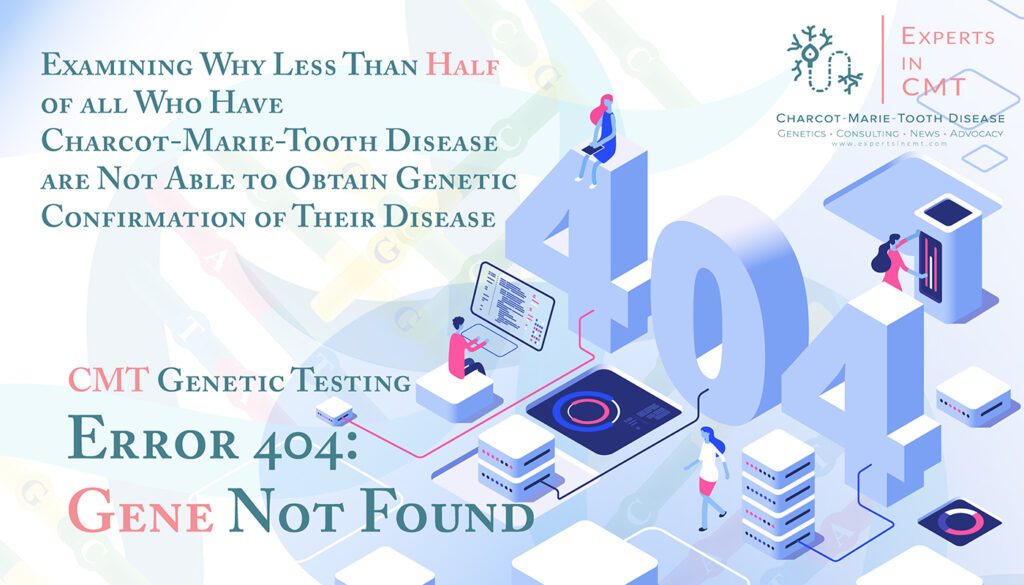
Error 404: Gene Not Found
CMT genetic testing often fails to identify the cause of the disease, even when comprehensive panels are used. Here, we discuss why this happens, what genetic tests can and cannot do, and why a negative result still matters.

CMT-SORD: What Is This Unique CMT Subtype?
CMT-SORD is a newly discovered CMT subtype driven by toxic sorbitol accumulation. This article explains how "SORD" works, why this subtype is different, and how it led to the fastest-moving therapeutic program in CMT history.