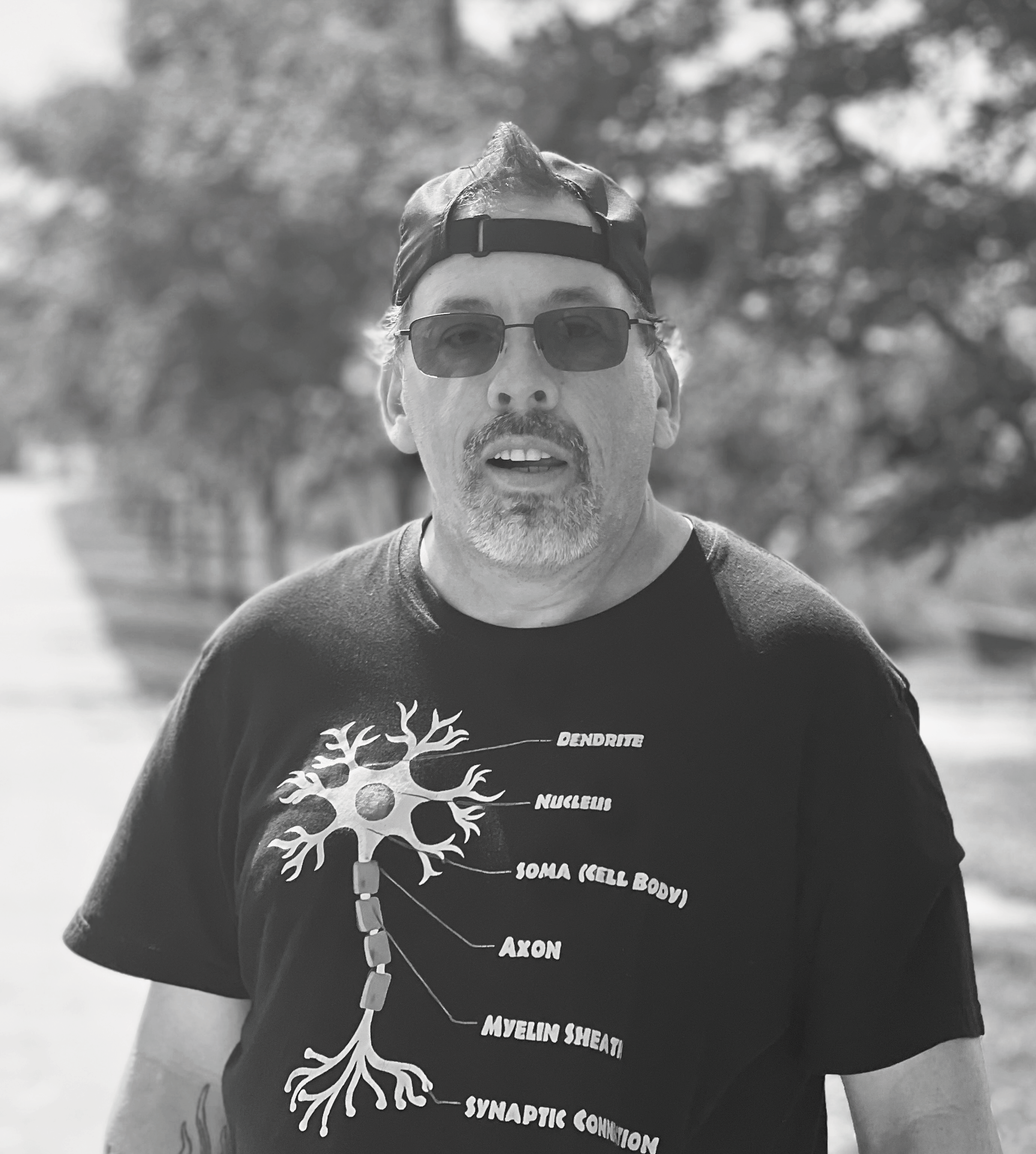
Kenneth Raymond was diagnosed with Charcot-Marie-Tooth disease (CMT) Type 1 (CMT1) in 2002 at the age of 29. He received genetic confirmation for CMT1A a year later. Since then, he has spent more than twenty years learning, writing, and teaching about CMT, with a focus on the genetics behind each subtype and the breathing involvement some individuals may experience.
He is a writer, educator, and advocate whose work blends lived experience with technical depth. His goal is to make complex information understandable for people who need it, whether they are newly diagnosed or clinicians seeking clarity. Kenneth approaches CMT through accuracy, practicality, and a commitment to showing how the science connects to everyday life.
His book, “CMT Associated Genes and Their Related Subtypes: The Definitive Guide,” provides a comprehensive catalog of the known genes and subtypes at the time of publication, along with explanations of genetic testing limitations and guidance on interpreting its results. This guide serves as the foundation for the publicly searchable CMT Genes Database here on the Experts in CMT platform.
His second book, “CMT Gene and Subtype Discovery: The Complete Bibliography,” compiles every original publication that announces each CMT subtype discovery. It is designed as a reference tool for individuals, clinicians, and researchers who want a clear record of the scientific sources behind CMT genetics.
Kenneth is also the author of “Breath by Breath: How Charcot-Marie-Tooth Disease Can Impact Breathing,” which brings together the current understanding of how CMT can affect breathing for some individuals and what signs to watch for. The book outlines what is known, where gaps remain, and which clinical pathways can help people receive accurate diagnosis and treatment. It is written for individuals, caregivers, and medical professionals who are trying to navigate a topic that is often complex and misunderstood.
Across all of his work, Kenneth’s goal is to help people understand a complex inheritable disease in a way that feels clear, grounded, and useful. He believes that accessible information gives people the confidence to ask questions, seek answers, and take the next step in their own care.
Explore More
The Dorsal Root
More From The Dorsal Root
When Medicine Lost Its Compass
Evidence failed not because it was wrong, but because it was weaponized. I lived the downstream effects of that failure for more than a decade. This is what happens when medicine forgets that data always ends in a human being.
Error 404: Gene Not Found
CMT genetic testing often fails to identify the cause of the disease, even when comprehensive panels are used. Here, we discuss why this happens, what genetic tests can and cannot do, and why a negative result still matters.

CMT-SORD: What Is This Unique CMT Subtype?
CMT-SORD is a newly discovered CMT subtype driven by toxic sorbitol accumulation. This article explains how "SORD" works, why this subtype is different, and how it led to the fastest-moving therapeutic program in CMT history.