CMT can be difficult for a doctor to diagnose, especially when there is no established family history. Doctors who specialize in CMT advise that to diagnose CMT, one must meet the appropriate clinical picture, which includes high arches, reduced sensation, especially in the lower limbs, reduced or absent reflexes, frequent tripping, difficulty writing, abnormal nerve conduction study (NCS) results, and a variety of other CMT symptoms. CMT shares symptoms with other conditions, such as Chronic Inflammatory Demyelinating Polyneuropathy (CIDP), Vitamin B12 deficiency, and G6PD Deficiency-Associated blood disorders. Part of diagnosing CMT involves ruling out conditions that are potentially treatable, especially those that can be easily treated, such as Vitamin B12 deficiency.
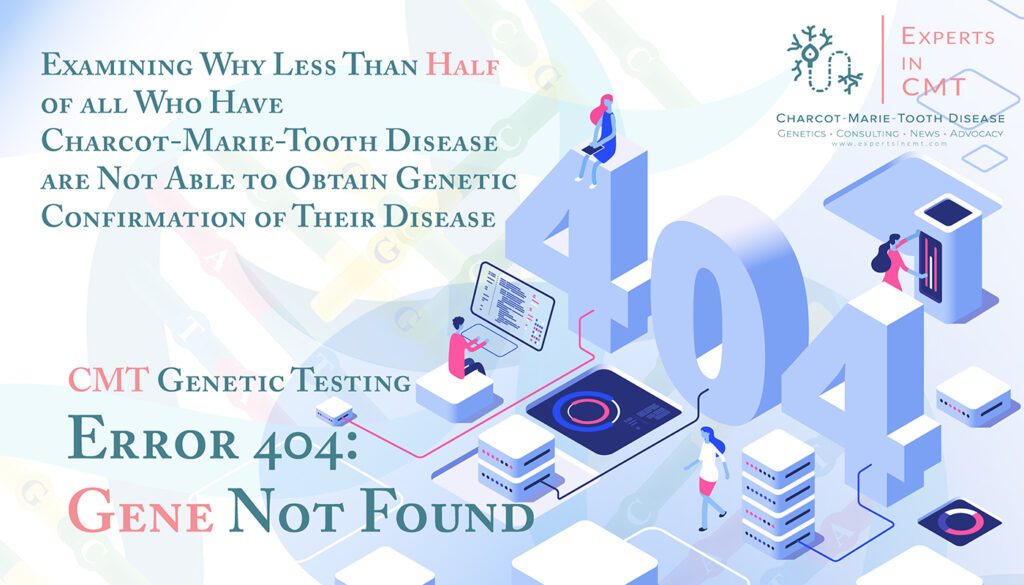
There is a misconception that in order to diagnose CMT, genetic testing is needed, or that genetic testing is all that is needed. In actuality, due to many factors and variables that contribute to inherent limitations in CMT genetic testing, genetic testing is only one piece of the diagnostic puzzle doctors have for diagnosing CMT. For everything CMT genetic testing can potentially identify and/or confirm, due to its limitations, CMT symptoms and NCS results are the standard for clinically diagnosing CMT. True, genetic testing is needed to pinpoint the exact CMT subtype, but when signs and symptoms are consistent with CMT (the appropriate clinical picture is met) doctors can definitively clinically diagnose CMT as CMT1 or CMT2 based on NCS results.