
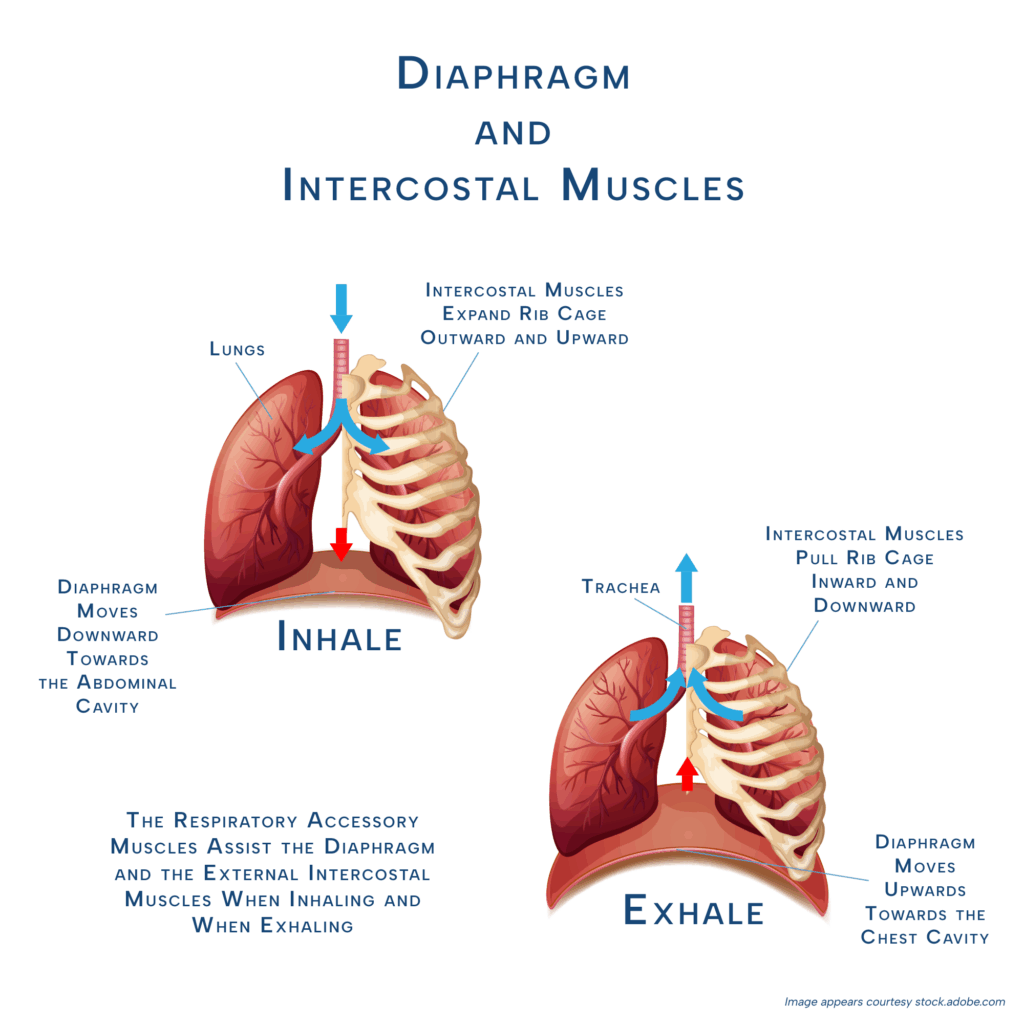
The respiratory cycle, which is one breath in and one breath out, is facilitated by the muscles used for breathing. The diaphragm is arguably the most important breathing muscle and starts each part of the respiratory cycle. The first part of the cycle, breathing in, begins with the diaphragm moving downward toward the abdomen. This action creates space within the chest cavity for the lungs to expand downward as they inflate with air. While this is a very important muscle movement for breathing, it is not the only one.
As the diaphragm moves downward into the abdomen, the external intercostal muscles of the rib cage expand the chest cavity outward. The chest cavity must expand outward if the lungs are to fully inflate with each breath. The downward motion of the diaphragm alone does not create enough space within the chest cavity for the lungs to fully inflate. The chest expanding outward is therefore a critical part of breathing. Several muscles, collectively referred to as the respiratory accessory muscles, help the diaphragm and the external intercostal muscles.
What Are the Respiratory Accessory Muscles?
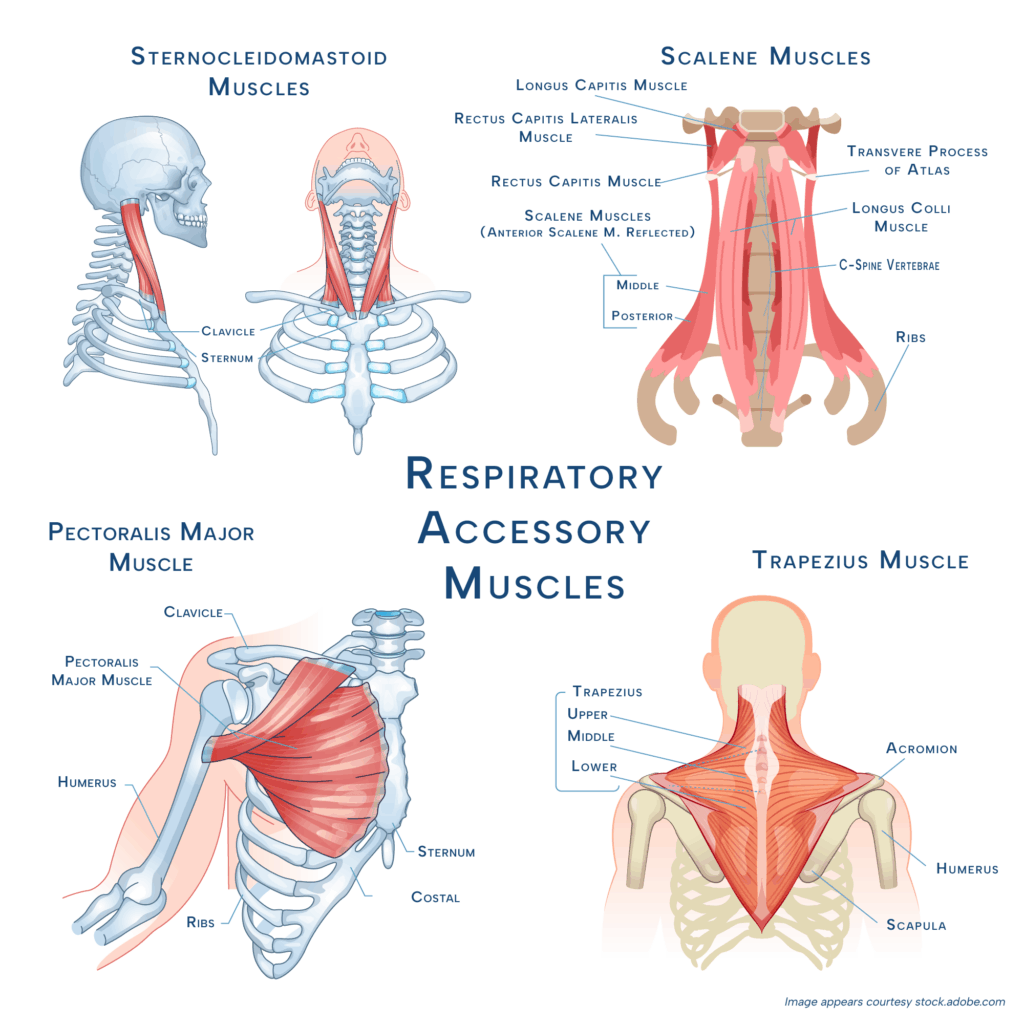
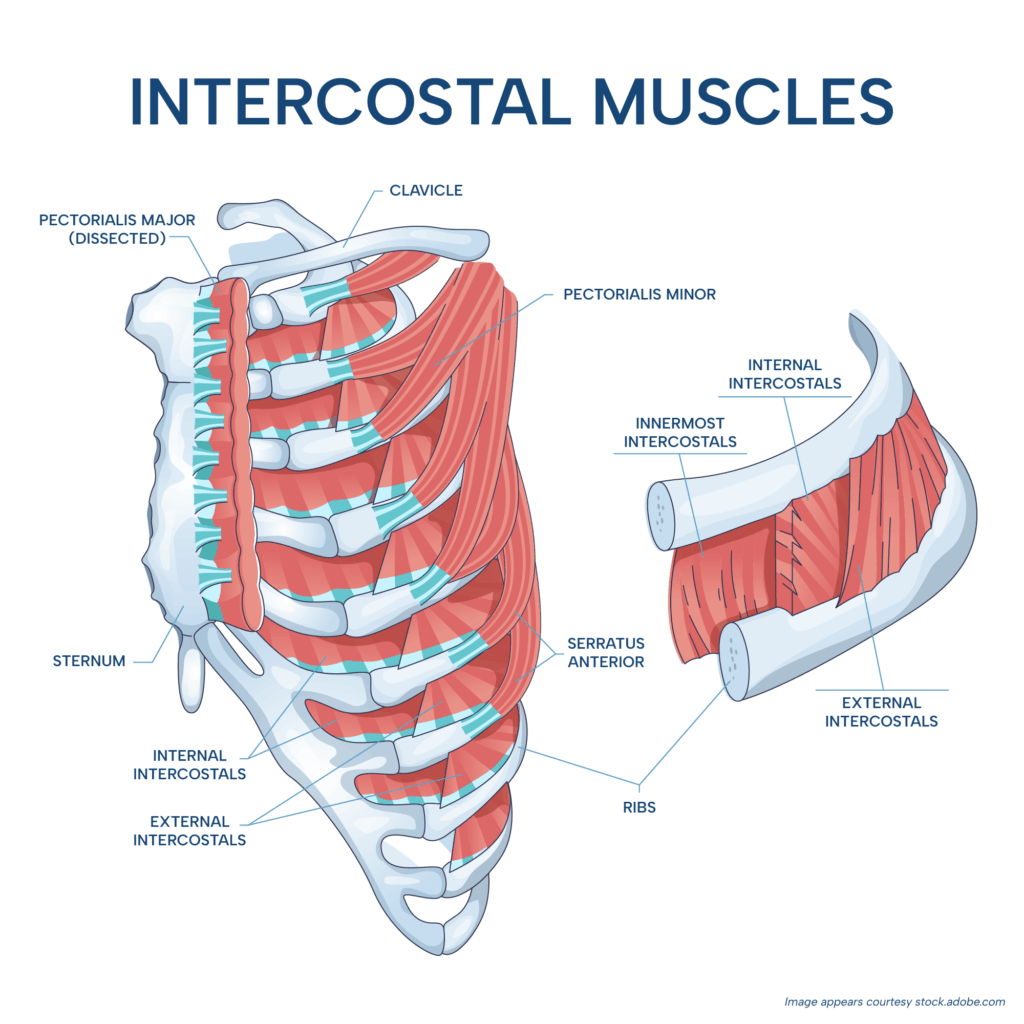
Respiratory accessory muscles are any of the muscles that help the diaphragm and the external intercostal muscles expand the chest cavity or make the chest cavity smaller with each respiratory cycle. This group includes the pectoralis major muscles of the chest, the sternocleidomastoid and scalene muscles of the neck, the trapezius muscle between the shoulder blades, the internal intercostal muscles, the innermost intercostal muscles, the subcostal muscles, the transversus thoracis muscles, and the abdominal muscles. Some respiratory accessory muscles assist with expanding the chest cavity when breathing in, some assist with making the chest cavity smaller when breathing out, and some assist with both.
The diaphragm is used for breathing in and for breathing out. The external intercostal muscles, however, are equally important because they are the primary muscles used for expanding the rib cage with each breath. These muscles do not work alone. They have help.
Which Muscles Are Used for Breathing In?
Aiding the external intercostal muscles with expanding the chest cavity with each breath are the sternocleidomastoid and scalene muscles of the neck, the trapezius muscle between the shoulder blades, and the pectoralis major muscles of the chest. Collectively, these muscles are the inspiratory accessory muscles (inspiratory means breathing in).
The pectoralis major muscles help expand the chest cavity outward. The sternocleidomastoid, scalene, and trapezius muscles each help expand the chest cavity by lifting the top of the rib cage, which expands the chest cavity upward. Without these muscles performing their critical inspiratory role, there would not be enough room in the chest cavity for the lungs to adequately inflate with each breath.
Which Muscles Are Used for Breathing Out?
Breathing out means reducing the size of the chest cavity. To accomplish this, the diaphragm moves upward from the abdominal cavity toward the chest cavity. At the same time the diaphragm is moving upward, the rib cage is contracting inward, and the top of the rib cage is moving downward. The muscles performing this task are the innermost intercostal muscles, the subcostal muscles, and the transversus thoracis muscles. Together with the abdominal muscles, which assist the diaphragm, these are the expiratory accessory muscles (expiratory means breathing out).
The innermost intercostal muscles, the subcostal muscles, and the transversus thoracis muscles reduce the size of the chest cavity by pulling the rib cage inward and the top of the rib cage downward, returning the chest cavity to its normal size and the rib cage to its normal position. Combined with the diaphragm moving upward (assisted by the abdominal muscles), air leaves the lungs as we breathe out.
Breathing in is an active process; muscles actively moving are required for breathing in. Breathing out is a passive process; muscles are not required to actively move for breathing out. However, muscle movement is needed to return the chest cavity back to its normal size and position.
Why These Muscles Matter for CMT
Taken together, these muscles form the mechanics of breathing. When any part of this system weakens, the ability for the chest cavity to fully expand or return to normal size is reduced, and breathing becomes impacted. Knowing how the system works makes it easier to have important conversations with your care team or patient about any present respiratory symptoms.