

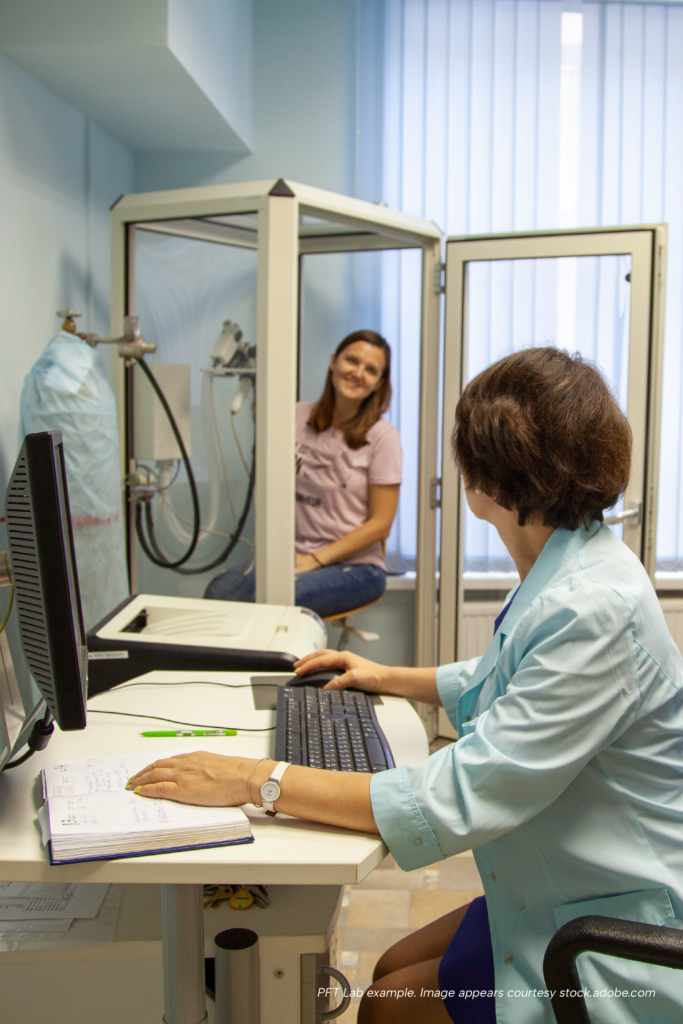
Doctors use a test called a pulmonary function test (PFT) to evaluate how well the respiratory system is working. A PFT is a non-invasive series of measurements that together create a detailed picture of breathing performance. Results generally fall into one of four patterns: normal, obstructive, restrictive, or mixed obstructive and restrictive.
Obstructive lung diseases, such as emphysema or bronchiectasis, exhibit an obstructive pattern, which reflects difficulty moving air out of the lungs and leads to hyperinflation, where the lungs do not fully empty.
Restrictive lung diseases, such as idiopathic pulmonary fibrosis or sarcoidosis, exhibit a restrictive pattern, which reflects difficulty moving air into the lungs and leads to hypoinflation, where the lungs do not fully expand.
CMT-related breathing issues cause neither. So, how does a PFT help diagnose the type of breathing issues CMT can cause?
What Do CMT-Related Breathing Issues Look Like on PFT?
Obstructive and restrictive lung diseases involve lung or airway tissue. CMT-related respiratory muscle weakness does not. The breathing issues CMT can cause are best understood as a thoracic cavity respiratory disease, meaning the breathing muscles cannot fully expand the chest with each breath.
When the chest cannot expand normally, the lungs cannot fully inflate, resulting in hypoinflation. Because hypoinflation is the hallmark of a restrictive pattern, CMT-related breathing issues will show a restrictive pattern on PFT, even though it is not a restrictive lung disease. The lungs themselves are healthy, but the breathing muscles cannot expand the thoracic cavity enough to draw in a full breath.
Spirometry as a Way to Measure Respiratory Muscle Weakness
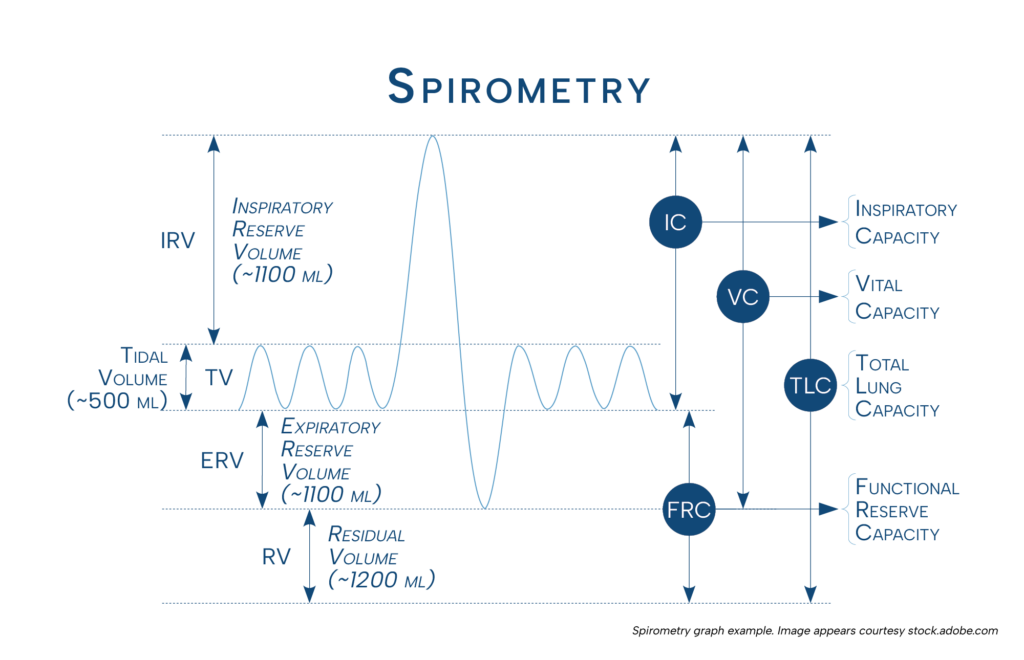
In addition to a restrictive pattern on PFT, breathing muscle weakness can also be evaluated through spirometry, which measures airflow and lung volumes. Supine spirometry, which is spirometry performed while lying flat, is especially useful.
People who have CMT-related breathing issues often experience much greater difficulty breathing when lying flat, and their spirometry values typically drop significantly when supine compared to upright. These differences can correlate with the presence and severity of respiratory muscle weakness.
Spirometry can sometimes be performed bedside if the clinic has the right equipment. Full PFT testing is usually done in a lab. Many PFT labs, however, are not equipped for supine spirometry, since they may lack a way to safely position patients flat. In these cases, creative positioning can sometimes work.
Supine and upright spirometry values that match the pattern expected with CMT-related breathing issues are not enough on their own. They must be considered alongside other PFT data and respiratory symptoms. The full set of information is what leads to an accurate diagnosis, which is essential for receiving the right treatment.