

CMT does not cause restrictive lung disease. Restrictive lung disease happens when airflow into the lungs is physically restricted by diseased lung or airway tissue, which leads to hypoinflation. CMT can lead to hypoinflation, but for a different reason.
In CMT, airflow into the lungs is not restricted. Instead, the weakened breathing muscles may not expand the chest fully, which reduces how much the lungs can inflate with each breath. But when the breathing muscles are supported correctly, the lungs are able to fully inflate. However, there is a rare caveat in CMT.
Mild scoliosis is somewhat common in CMT. Scoliosis is a sideways curvature of the spine, and in some cases it can become severe enough to reduce the size and shape of the chest cavity. When the chest cavity becomes smaller, it cannot expand as well. This limits how much the lungs can inflate, which reduces total lung capacity. Over time, this can decrease lung distensibility (the lungs ability to stretch as they fill) and eventually create a true restriction to airflow into the lungs. When scoliosis in CMT becomes severe enough to impact breathing, it is called CMT-induced scoliosis-related restrictive lung disease.
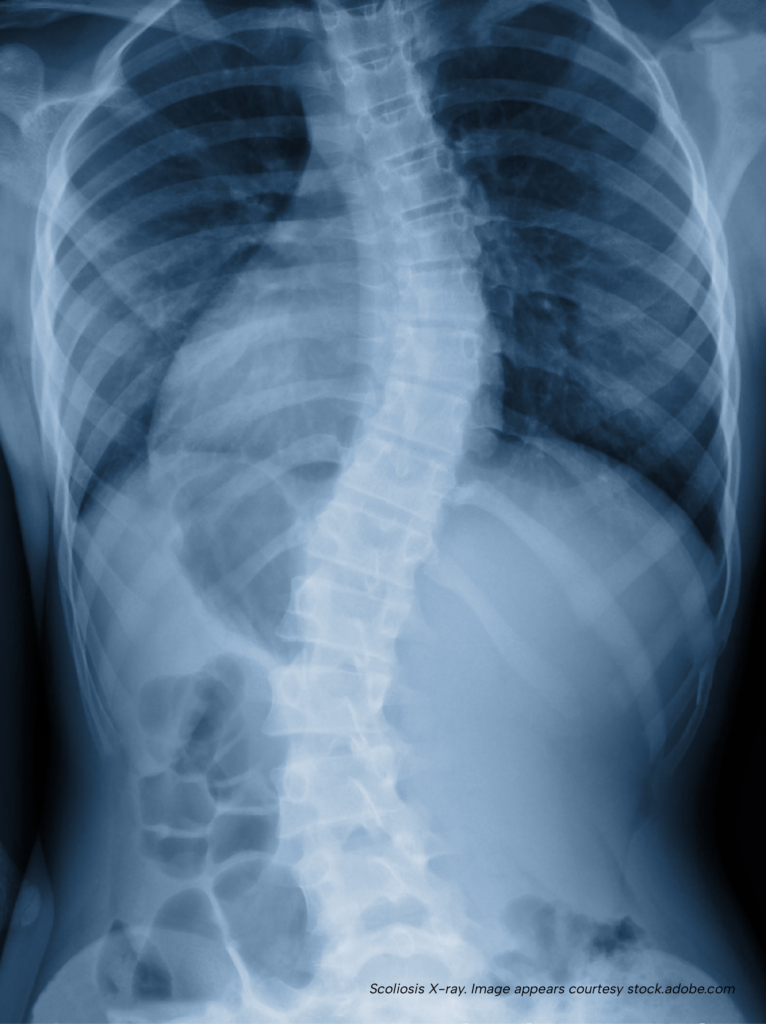
CMT-related scoliosis can be challenging, but it is rare for it to become severe enough to affect lung function. When it does, corrective spine surgery is usually recommended. Although CMT itself does not cause restrictive lung disease, a severe scoliosis caused by CMT can lead to restrictive lung disease if the curvature becomes severe enough to interfere with breathing.