

Although there is not yet a treatment for CMT itself, the many symptoms are treatable and manageable. This is especially true for CMT-related respiratory muscle weakness. For those who may develop breathing muscle weakness, an often-early sign is obstructive sleep apnea (OSA). OSA is common in the general public, and the first-line treatment is CPAP.
What Is CPAP?
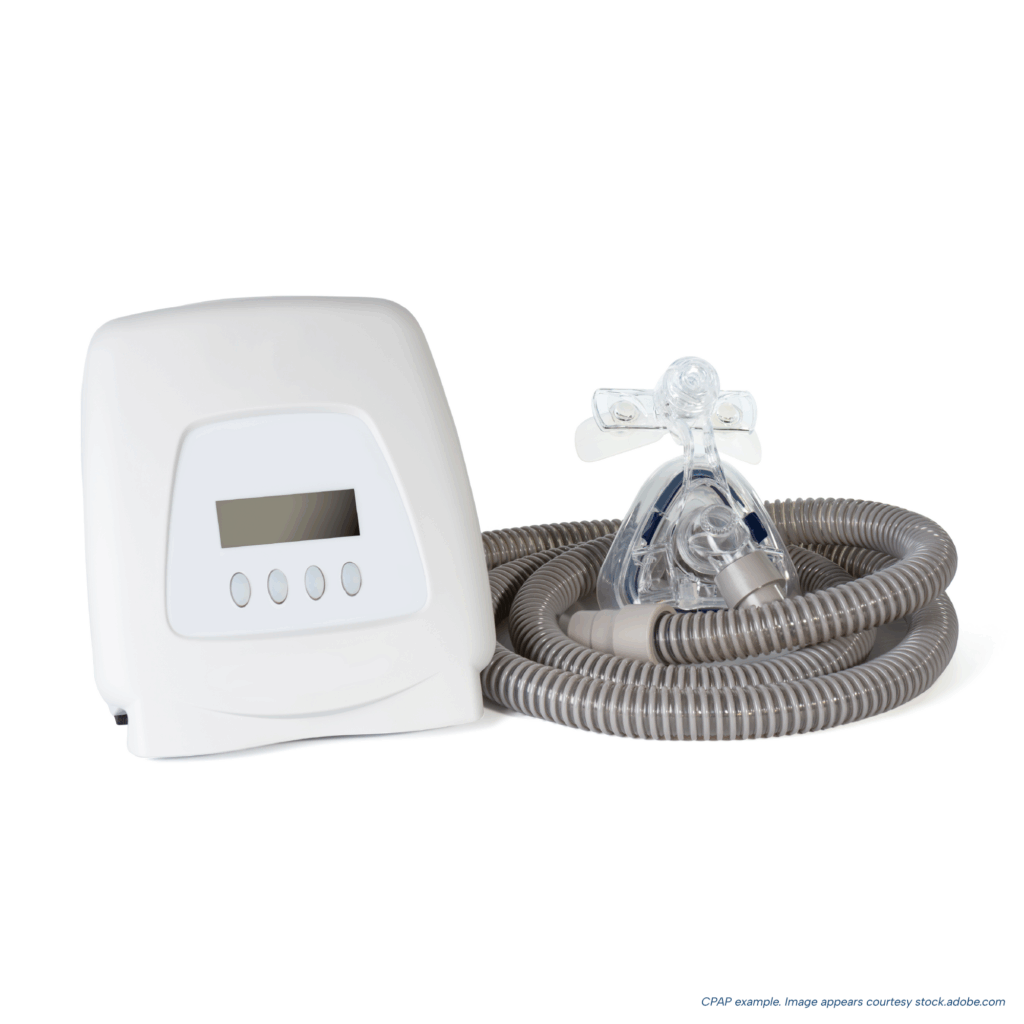
CPAP stands for Continuous Positive Airway Pressure. CPAP is a small tabletop device that sends pressurized air through a hose to a mask worn during sleep. The pressure is low (less than 0.5 psi, even at the highest settings) and keeps the airway open, allowing normal breathing to continue throughout the night. Pressure settings are measured in centimeters of water (cmH₂O), and the maximum setting of most devices is 25 cmH₂O, which equals 0.355 psi.
Most people tolerate CPAP well. Some, however, may find it difficult to breathe out against continuous pressure, even though the pressure is low. When this happens, a device called BiPap is often the next option.
What Is BiPap?
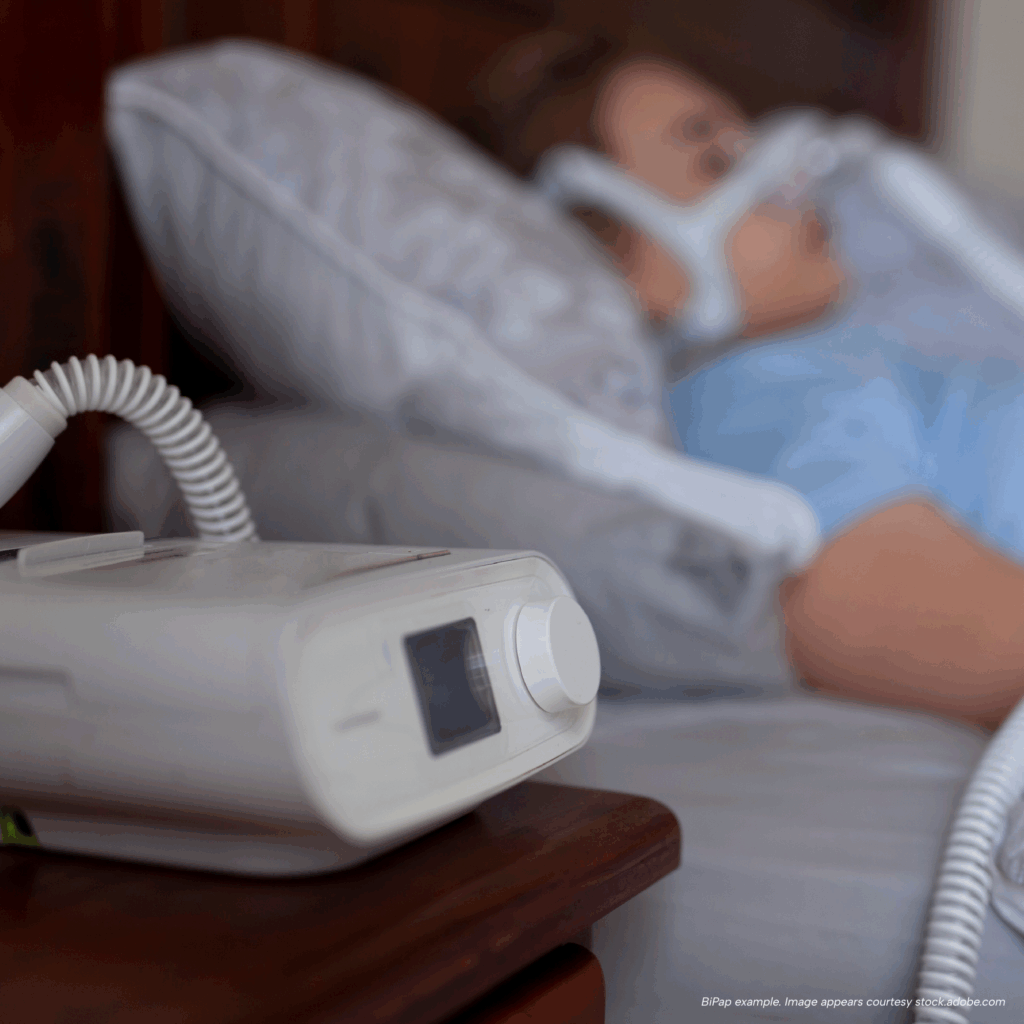
BiPap stands for Bi-level Positive Airway Pressure. Like CPAP, it delivers pressurized air through a hose and mask. The difference is that BiPap provides a higher pressure for breathing in and automatically lowers the pressure for breathing out. This makes exhaling easier for many people.
Although the maximum pressure is the same as CPAP (25 cmH₂O), BiPap can reduce the exhalation pressure to much lower levels, sometimes around 5 cmH₂O.
Some people do not tolerate BiPap well, or it may not fully address their needs. When this happens, another option called VPAP may be considered.
What Is VPAP?
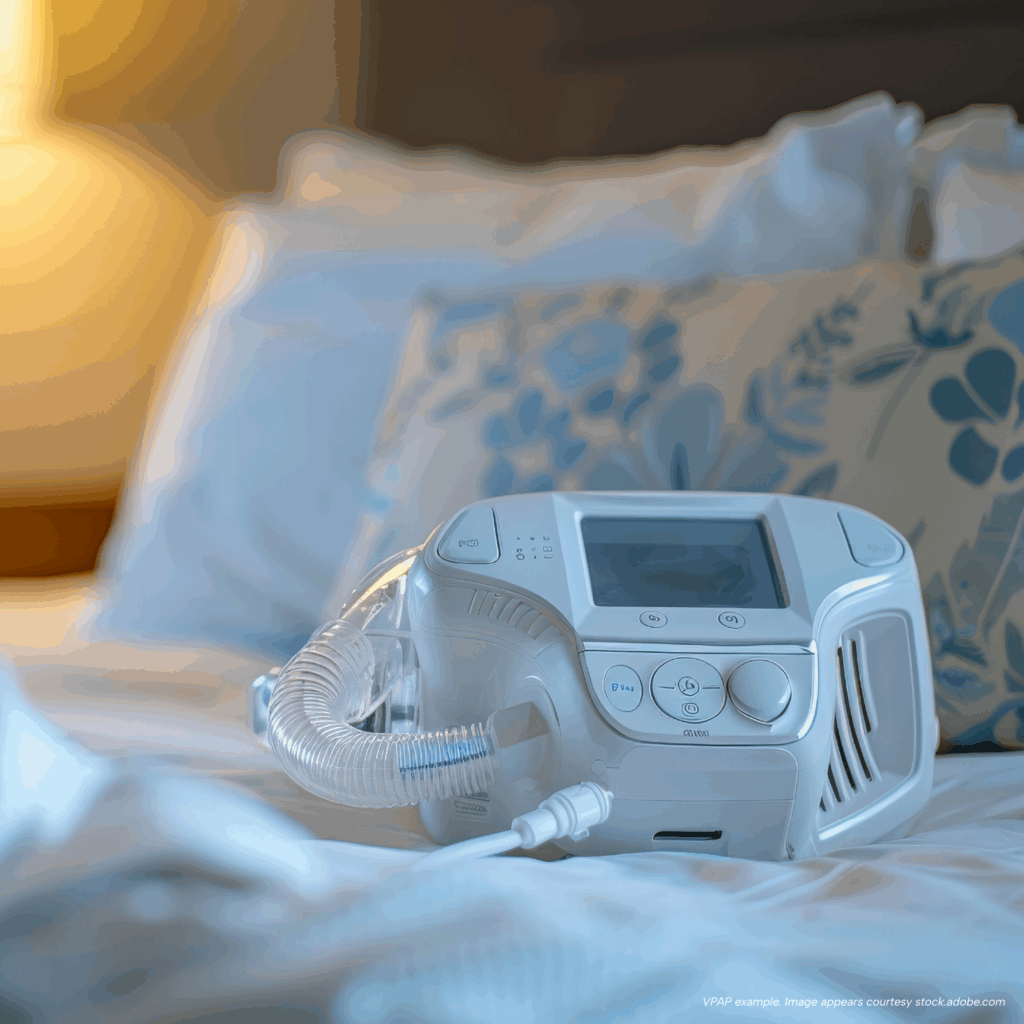
VPAP stands for Variable Positive Airway Pressure. VPAP devices deliver pressurized air just like CPAP and BiPap, but they are designed to adjust the pressure automatically throughout the night based on the person’s needs. Unlike BiPap, which uses two fixed pressures, VPAP can vary the pressure in real time in response to detected breathing changes.
CPAP, BiPap, and VPAP have been used for many years and generally treat obstructive sleep apnea with ease. However, successful treatment with these devices depends on having normal respiratory muscle strength. But when CMT causes the breathing muscles to weaken, the situation changes.
When the muscles used for breathing become weakened, the lungs’ ability to inflate with an adequate amount of air (tidal volume (VT)) to maintain healthy CO₂ levels is reduced, especially during sleep. To treat this, doctors have historically used BiPap or VPAP and increased the difference between the pressure used for breathing in and the lower pressure used for breathing out. This pressure break differential can theoretically raise VT (a pseudo-volume support), but using pressure support to create volume support is difficult. Newer technology reduces these challenges.
With the technologies and treatment options available today, CMT specialists do not recommend pressure-only therapies for CMT-related respiratory muscle weakness. Instead, a type of treatment called volume support is the preferred approach.
What Is Volume Support?
CPAP, BiPap, and VPAP are all forms of non-invasive ventilation (NIV). These devices are only designed to keep the airway open. CMT-related breathing muscle weakness, however, requires additional support: volume. Volume support helps the lungs inflate more fully with each breath. Pressure support alone cannot do this.
There are two types of NIV that provide volume support: AVAPS and iVAPS. These devices resemble pressure support devices, but they provide both volume support and pressure support, making them more suitable for treating CMT-related breathing muscle weakness.
What Is AVAPS?
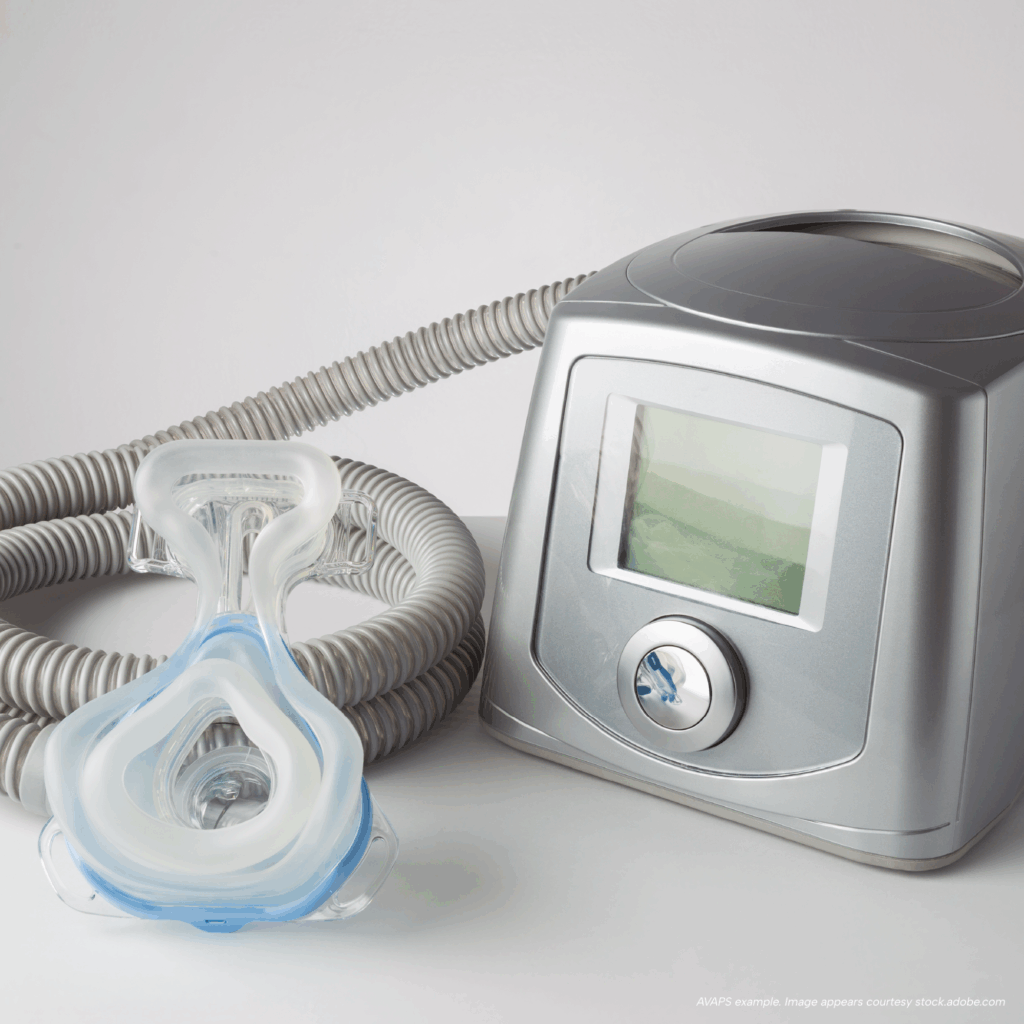
AVAPS stands for Average Volume Assured Pressure Support. Like CPAP, BiPap, and VPAP, AVAPS is a small tabletop device that sends air through a hose that connects to a mask worn by the person. The full setup looks just like a CPAP, BiPap, or VPAP, and its purpose is to help the person breathe more easily.
CPAP, BiPap, and VPAP have one design purpose and only one: to keep the airway open. AVAPS provides an additional advantage that these devices alone cannot. In addition to pressure therapy, also called pressure support, AVAPS provides volume support. What’s this?
AVAPS sends a measured amount of air with each breath, and this volume remains consistent with each breath. The amount of air delivered with each breath is equal to the person’s tidal volume (VT). The general rule of thumb for VT is 450 ml for adult women and 500 ml for adult men. iVAPS is very similar to AVAPS.
What Is iVAPS?
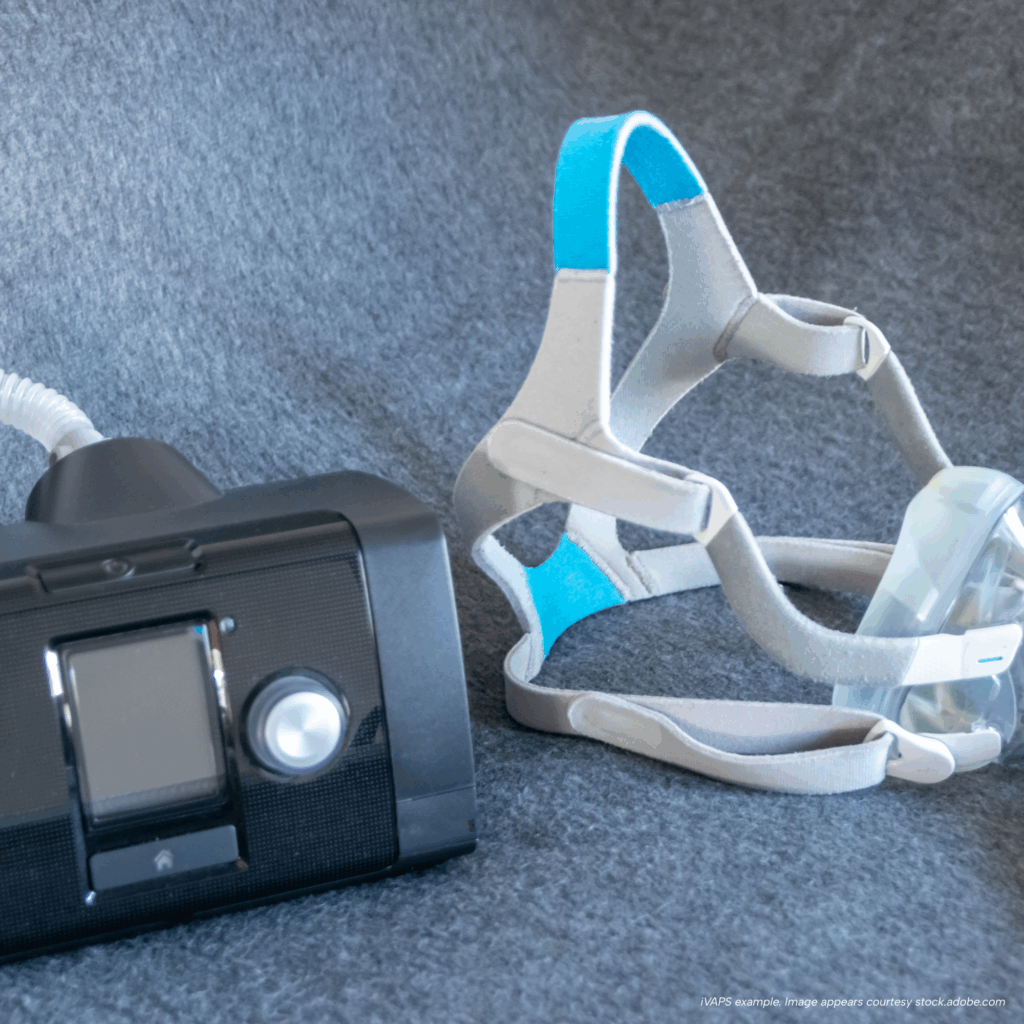
iVAPS stands for Intelligent Volume Assured Pressure Support. iVAPS functions similarly to AVAPS, but with a key difference. The volume support provided by AVAPS is consistent with every breath and is based on VT. iVAPS does this, but also attempts to calculate the negative space within the lungs and then provide extra volume to fill the calculated space. This helps the lungs inflate more fully and requires less muscle force. iVAPS has another advantage.
iVAPS can use variable volume support, just like VPAP uses variable pressure support. Whereas AVAPS delivers a set volume that remains constant, iVAPS can adjust the delivered volume in response to changes detected by the device throughout the use cycle. iVAPS technology enables these changes in real time, providing distinct advantages over AVAPS.
Why Is Volume Support Important?
When someone has CMT-related respiratory muscle weakness, they experience a reduction in their ability to fully inflate the lungs with each breath. Volume support delivers an amount of air equal to the person’s VT (whether AVAPS or iVAPS). This helps the lungs inflate more fully with each breath and requires less muscle effort. This also provides a much-needed rest for the breathing muscles, as they don’t have to work as hard.
Because volume support provides a measured amount of air with each breath, it offers an advantage over the pressure break differential technique used with BiPap or VPAP. Volume support can provide a controlled and consistent amount of air, something pressure alone cannot achieve. The pressure support of AVAPS and iVAPS, however, is still a crucial part of treatment.
The pressure support of AVAPS and iVAPS, which functions similarly to VPAP by adjusting pressures as needed throughout the use cycle, helps keep the airway open, allowing the volume support to reach the lungs. Pressure support then reduces, making it easier for the user to fully exhale without having to “fight” against the pressure of the mask. Essentially, AVAPS and iVAPS are VPAPs with added volume support.
With pressure support ensuring that air reaches the lungs, the volume support can then do its job of helping the weakened breathing muscles. This leads to improved sleep quality and overall improved health. Volume support is not limited to nighttime use. AVAPS and iVAPS can also be used during the day when needed.
How Do You Know Which Therapy Is Right for You?
Not everyone who has CMT will develop respiratory muscle weakness. When no breathing muscle weakness is present, treating obstructive sleep apnea (OSA) in CMT follows the same approach used in the general public. In these situations, CPAP is usually the first-line therapy and is often successful. If CPAP is uncomfortable or difficult to tolerate, BiPap or VPAP may be appropriate alternatives.
NIV devices that provide volume support can be more expensive. Because of this, insurance carriers may require starting with the lower-cost options first, typically beginning with CPAP. If CPAP does not work, the next step is usually BiPap, then VPAP, before moving to AVAPS or iVAPS. Coverage policies vary widely, so it is best to speak with your insurance carrier about approval requirements and coverage options.
If someone with CMT has any degree of CMT-related respiratory muscle weakness, even if they also have OSA, volume support is the therapy CMT specialists prefer. Pressure-only devices cannot address the underlying issue: breathing muscles that have become weakened due to the effects of CMT on the nerves that control them. Successful treatment requires both pressure support and volume support to meet the needs of the breathing muscles in this situation.
If you have any respiratory symptoms, talk to your doctor about what they feel are your best options.