Nerves talk. We listen. CMT’s within reach.
The Dorsal Root offers unique perspectives on CMT’s science and the people behind it. Informed, clear, and always within reach.

A Name That Does Too Much Work
AwarenessJean-Martin Charcot's name appears throughout medicine, but nowhere does it create more confusion than in the foot. Learn why the CMT foot and Charcot neuroarthropathy, also known as Charcot foot, share a name yet differ in how they develop, appear, and are managed.
Read
When Medicine Lost Its Compass
AwarenessEvidence failed not because it was wrong, but because it was weaponized. I lived the downstream effects of that failure for more than a decade. This is what happens when medicine forgets that data always ends in a human being.
Read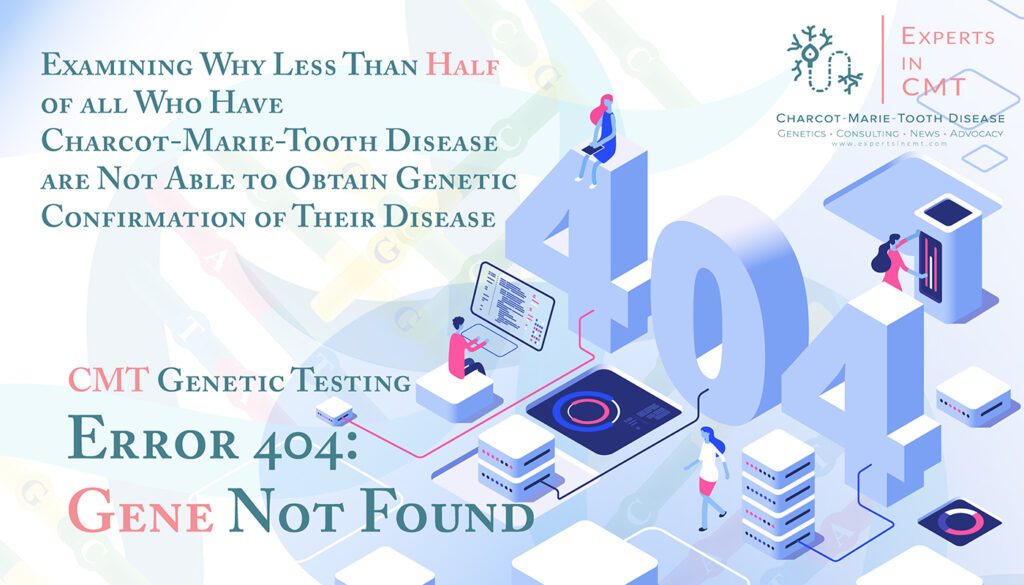
Error 404: Gene Not Found
AwarenessCMT genetic testing often fails to identify the cause of the disease, even when comprehensive panels are used. Here, we discuss why this happens, what genetic tests can and cannot do, and why a negative result still matters.
Read
CMT-SORD: What Is This Unique CMT Subtype?
AwarenessCMT-SORD is a newly discovered CMT subtype driven by toxic sorbitol accumulation. This article explains how "SORD" works, why this subtype is different, and how it led to the fastest-moving therapeutic program in CMT history.
Read
We All Know the Drill
Awareness“What is CMT?” sounds like a simple question, but the answer is different for every person who lives with it. This article explores why no single definition can fully capture CMT.
Read
The Story of the 2A Confliction
AwarenessCMT2A has been known by several different names over the years, creating widespread confusion for patients and clinicians alike. Here, we discuss how the confusion happened, what was corrected, and what the name CMT2A means today.
Read
Pushing the Limits
GeneticsCMT genetics are expanding faster than diagnostic testing can keep up. This article examines how gene discovery transformed our understanding of CMT, why genetic confirmation remains elusive for many, and where the science is headed next.
Read
Where’d It Come From? Where’s It Going?
AwarenessCMT is often described as a single disease, but genetically it is anything but. From autosomal and X-Linked inheritance to de novo and mitochondrial mutations, this piece explains how CMT begins, how it’s passed on, and why family history doesn’t always tell the full story.
Read
CMT Respiratory Involvement: What It Is and What It Is Not
AwarenessWhen CMT affects breathing, the problem is not lung disease. Coauthored with Dr. Elsayegh, this article explains how CMT can cause neuromuscular respiratory muscle weakness for some, why it is often misdiagnosed as restrictive lung disease, and how proper diagnosis changes treatment.
Read
Atrophy vs. Dystrophy: Is CMT Really MD?
AwarenessCMT is frequently associated with the Muscular Dystrophy Association (MDA), leading some to assume it is a form of muscular dystrophy. This article explains why that assumption is incorrect and how CMT is properly classified.
Read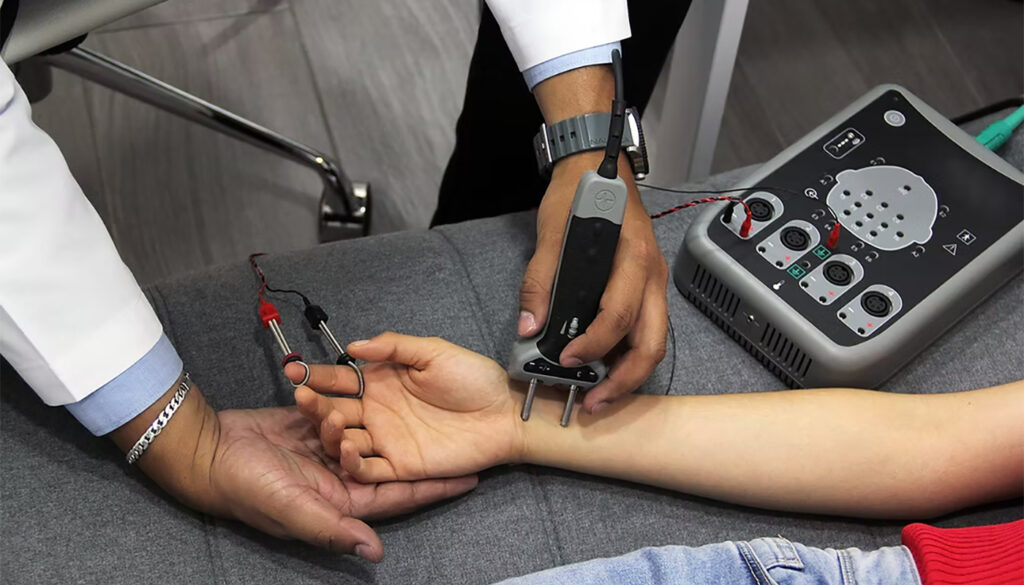
The Invaluable Electrodiagnostic Tools of Nerve Conduction Study and Electromyogram in CMT
AwarenessNerve conduction studies are one of the most important tools doctors use when evaluating suspected CMT. This article explains what these tests measure, how doctors interpret the data, and how nerve conduction patterns help distinguish between demyelinating, axonal, and intermediate types of CMT.
Read
Does CMT Skip a Generation? Can It?
AwarenessThe idea that CMT skips a generation is a misconception rooted in complex inheritance patterns. This article explains how dominant, recessive, X-Linked, and de novo mutations interact, and why CMT doesn't skip a generation.
Read