What is CMT?

CMT. Unpacked. Unfiltered.

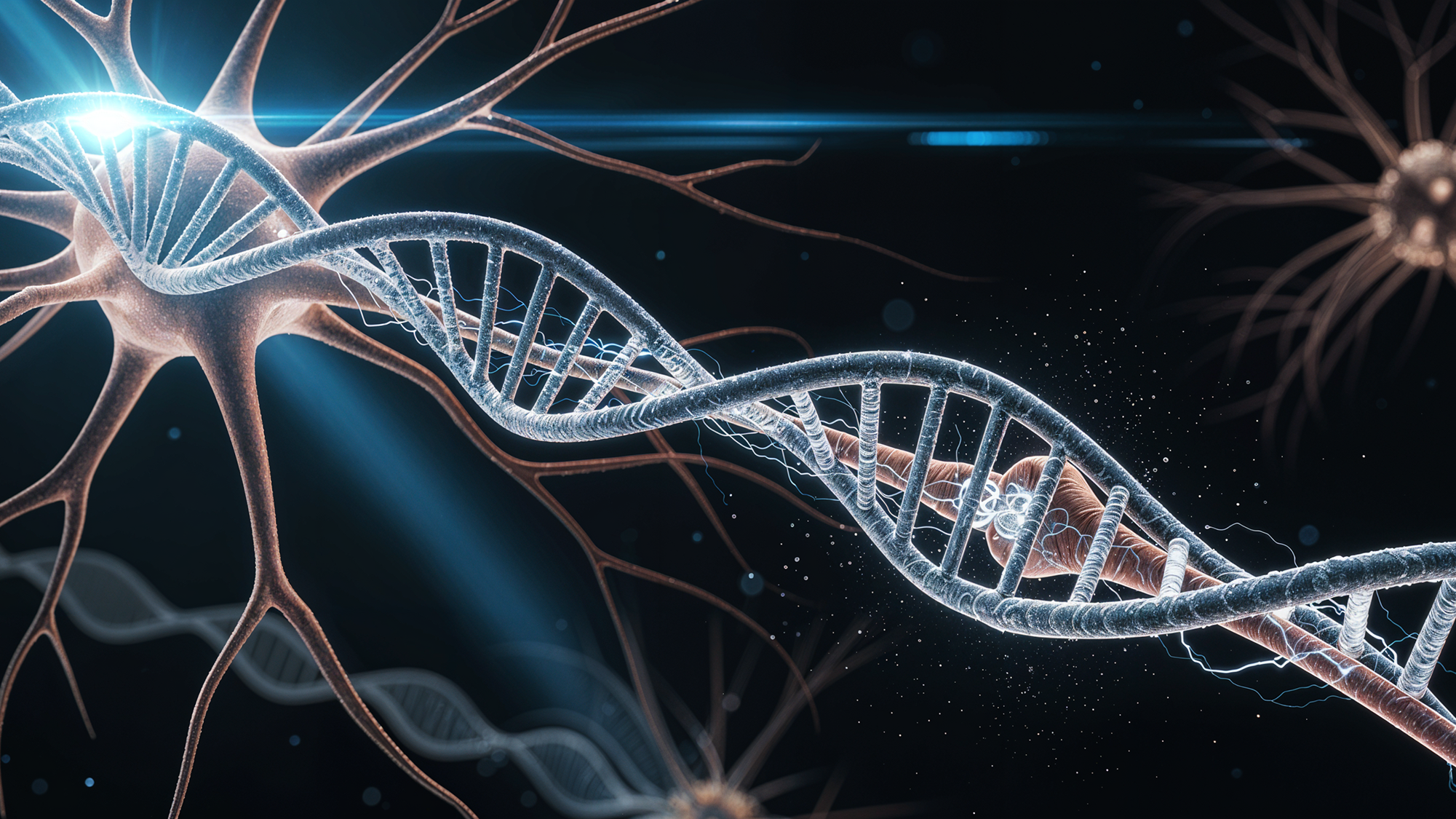
DNA Nerve Image

Charcot-Marie-Tooth disease (CMT) is a rare inheritable peripheral neuropathy affecting about 1 in 2500 people, or an estimated three million individuals worldwide. More broadly, CMT is a heterogeneous group of inheritable sensory and motor peripheral neuropathies, axonopathies, myelinopathies, and neuronopathies. Clinically, CMT is a multisystem neuromuscular disease. Medically, it is one of the most complex diseases to understand. For those who have CMT, the disease is intrusive, unrelenting, often debilitating, unforgiving, and, albeit very rare, can sometimes be fatal.

CMT gets its name from the three doctors who first described it in 1886: Jean-Martin Charcot (1825-1893), Pierre Marie (1853-1940), both from France, and Howard Henry Tooth (1856-1925) from England. In its infancy, CMT was described as a disease that causes lower-leg muscle weakness and atrophy, known as peroneal muscle atrophy. Over time, CMT revealed itself to be profoundly more diverse, with effects far beyond the lower legs. Today, CMT refers to any peripheral neuropathy that has a genetic cause, even if the specific genetic cause is unknown.

Although first described in 1886, the cause of CMT remained elusive for more than 100 years. Scientists knew CMT was inheritable and clearly ran in families, but they did not know why. Finally, published on January 1, 1991, researchers identified a cause: a duplication of a tiny segment of chromosome 17 (17p11.2). This marked the beginning of modern CMT genetic discovery.

What was once just one known cause in 1991 quickly became several. The original chromosome duplication was refined to a PMP22 gene duplication in 1992. By the end of the decade, scientists had identified CMT-causing mutations in six genes, defining ten different CMT subtypes. By the end of 2001, which marked the first decade of genetic discovery, another seven genes had been identified, adding ten more subtypes to the list, although four of those were formally classified later.

Today, scientists have identified CMT-causing mutations in more than 140 genes that account for more than 170 individual subtypes. These subtypes fall into 13 type classifications, such as dHMN (Distal Hereditary Motor Neuropathy), GAN (Giant Axonal Neuropathy), and HSAN (Hereditary Sensory and Autonomic Neuropathy).

Despite this disease diversity, there is no single symptom or feature that belongs uniquely to any one subtype, with the exception of CMT-SORD. Anyone with CMT can experience any symptom associated with the disease, regardless of subtype. Age at onset, rate of progression, symptom severity, and overall disease course vary widely. Even within the same family, experiences can differ significantly. One thing is certain: CMT is progressive over a lifetime. The progression, however, can look very different from one person to the next.

Experts in CMT

CMT Quick Facts

  1.  Most Common Inheritable Neuropathy
  2.  More Than 140 Genes
  3.  Affects 1 in 2,500 People
  4.  More Than 3 Million Patients World Wide
  5.  Affects All Ethnicities and Age Groups
  6.  Affects the Nerves that Control the Muscles, but the Muscles are not Directly Diseased
  7.  Progressive Over One’s Lifetime
  8.  Is Not an Autoimmune Disease
  9.  Is Not Acquired and Is Not Contagious
  10.  Currently No Cure
What are the Signs and Symptoms of CMT?
The signs and symptoms of CMT are typically described as high arches, numbness and/or tingling in the feet and hands, frequent trips, frequent ankle sprains, walking/standing on the sides of the feet, a slow response to temperature (hot and cold water), poor balance…
What Causes CMT?
CMT is a disease of the peripheral nerves. The peripheral nerves are every nerve that lie outside the brain and spinal cord with the exception of the optic nerves, and CMT affects every one of these. CMT is caused by a mutation in any one of 140 different genes, and the number of genes…
How Many Types of CMT Are There?
The advent of CMT genetic discovery coupled with a growing understanding of what CMT is has resulted in an ever-evolving manner in which CMT types are classified, categorized, organized, and newly discovered subtypes named. CMT as a disease name has emerged to encompass…
How Is CMT Diagnosed?
CMT can be difficult for a doctor to diagnose, especially when there is no established family history. Doctors who specialize in CMT advise that to diagnose CMT, one must meet the appropriate clinical picture, which includes high arches, reduced sensation, especially in the lower limbs, reduced or absent reflexes, frequent tripping, difficulty writing, abnormal nerve conduction study (NCS) results, and a variety of other CMT symptoms. CMT shares symptoms with other conditions, such as Chronic Inflammatory Demyelinating Polyneuropathy (CIDP)…
What’s the Difference Between CMT1 and CMT2?
CMT1 and CMT2 are the two basic CMT Types that doctors are able to clinically diagnose. CMT is divided into three types of neuropathy: demyelinating, axonal, and intermediate. Each of these three are determined by their related nerve conduction characteristics, how the nerves conduct (transmit) a signal. Clinically, demyelinating CMT, as determined by nerve conduction studies, is classified as CMT1. Axonal CMT, as determined by nerve conduction, is classified as CMT2. Intermediate CMT…
What Is CMT1F/2E?
Mutations in the NEFL gene are linked to both CMT1F and CMT2E. Historically, doctors have referred to this as 1F/2E. This is because both subtypes are linked to this gene. But is there a difference CMT1F is a demyelinating subtype, and CMT2E is axonal. These two distinctions are based on nerve conduction study (NCS) results. If the results show…
Can I have Normal EMG/NCS Results and Still have CMT?
EMG and NCS are both types of electrodiagnostic tests. NCS stands for nerve conduction study and uses electrodes placed on the surface of the skin that record how well the nerve conducts (transmits) a signal when the person administering the tests “triggers” the nerve. EMG stands for electromyography and uses…
Do I Need a Genetic Test to Know if I Have CMT?
Do you need a genetic test to know if you have CMT? The short answer is no. The long answer is also no. You do not need genetic testing to know if you have CMT. It is a misconception that genetic testing is required to diagnose CMT or that genetic testing…
How Is CMT Inherited?
CMT is inheritable because the genetic mutations that cause CMT, whatever those mutations might be, are inheritable. The chances of your children inheriting CMT depend solely on the specific underlying genetic mutation. How CMT is passed on/inherited is referred to…
Can I Have CMT Without Inheriting It?
Yes, you can have CMT without having inherited it from a parent. CMT is inheritable because the genetic mutations that cause CMT can be passed on. These same mutations, however, can occur on their own without having been inherited. When somebody has CMT without having inherited…
Can CMT Cause Breathing Problems?
Yes, CMT can cause breathing problems. When it does, it’s a specific kind of respiratory impairment called CMT-induced neuromuscular respiratory muscle weakness. This type of impairment, which is not a disease of lung tissue, is caused by a weakening of the muscles used for breathing. The muscles used for breathing, therefore, can become weakened…
Does CMT Cause Atrophy?
There are three types of atrophy: physiologic, pathologic, and neurogenic. Atrophy is defined as tissue wasting caused by an external factor that acts independently of the tissue that’s wasting. Whereas dystrophy, on the other hand, is defined as tissue wasting caused by something happening within the tissue itself. First and foremost…
What Are Some Other CMT Symptoms?
CMT can also affect areas of the body that are not always included in basic symptom lists. These symptoms are not universal and vary widely from person to person, but they are part of the broader picture of the disease. Some stem directly from…

Explore More


The Dorsal Root

More From The Dorsal Root

Close-up of a doctor’s hand holding a prescription pad while a patient’s wrist is wrapped with metal chains.

When Medicine Lost Its Compass

Evidence failed not because it was wrong, but because it was weaponized. I lived the downstream effects of that failure for more than a decade. This is what happens when medicine forgets that data always ends in a human being.
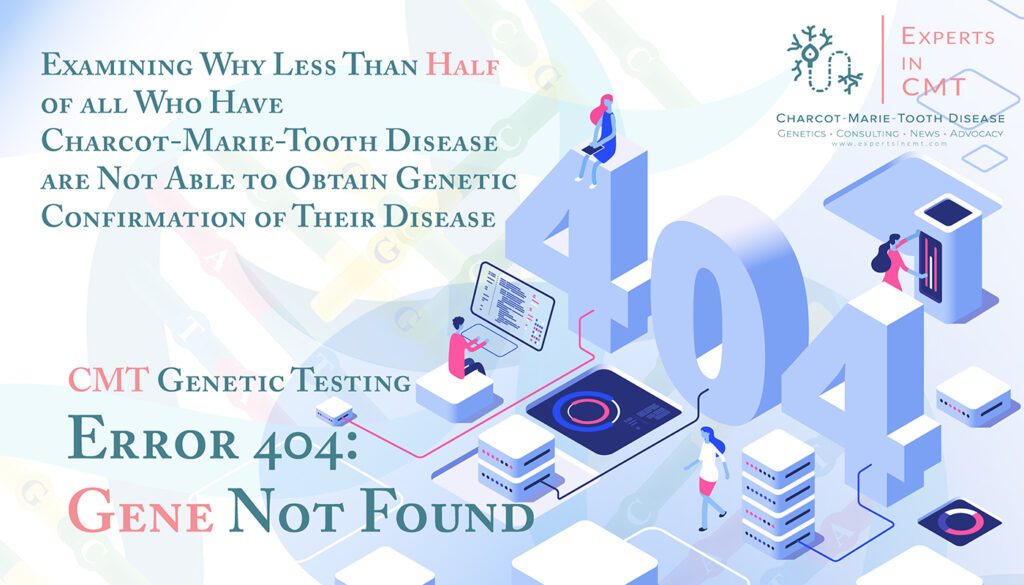
Illustrated graphic showing large ‘404’ numerals with people interacting with data screens and servers, alongside text reading ‘CMT Genetic Testing Error 404: Gene Not Found’ and ‘Examining Why Less Than Half of All Who Have Charcot-Marie-Tooth Disease Are Not Able to Obtain Genetic Confirmation of Their Disease.

Error 404: Gene Not Found

CMT genetic testing often fails to identify the cause of the disease, even when comprehensive panels are used. Here, we discuss why this happens, what genetic tests can and cannot do, and why a negative result still matters.

Illustrated cover graphic showing a split landform with branching directional arrows, two people with question marks above their heads, and the title ‘SORD Deficiency: Decoding This Newly Discovered and Confusing CMT Subtype.

CMT-SORD: What Is This Unique CMT Subtype?

CMT-SORD is a newly discovered CMT subtype driven by toxic sorbitol accumulation. This article explains how "SORD" works, why this subtype is different, and how it led to the fastest-moving therapeutic program in CMT history.