
Experts in CMT’s CMT Subtype Browser brings together CMT-associated genes and the subtypes they cause into a single, searchable reference. Genetic discoveries in CMT are published across hundreds of individual research papers spanning decades, with no single registry responsible for cataloging or maintaining these findings for public use. The CMT Subtype Browser aims to bridge that gap by consolidating CMT genetic information into a single location and presenting it in a structured, accessible format. This browser catalogs which gene causes each subtype and how it is classified. Its companion, the CMT Variant Mechanisms Browser, explains how the gene variant (mutation) causes CMT: the mechanism behind each subtype, its supporting evidence, and a confidence level. Experts in CMT’s CMT Gene Browser provides a gene-first research surface that brings together data and identifiers from many separate platforms and databases.
The CMT Subtype Browser allows you to explore CMT subtypes using multiple filters and search tools. Results can be narrowed by CMT type, neuropathy classification, inheritance pattern, chromosome, variant mechanism, or by using any combination of these filters together. You can also search directly by gene symbol, subtype name, or year of discovery. Sorting options enable results to be ordered consistently, supporting comparison and reference. Filter and sort selections generate a responsive URL, allowing searches to be bookmarked or shared.
Each record represents a CMT subtype and presents high-level genetic and clinical context. This includes the associated gene, inheritance pattern, neuropathy classification, and links to original discovery publications and supporting references. Where applicable, entries also reflect corrected or retracted gene associations to preserve historical accuracy.
Symptomatology and phenotype descriptions are included for each subtype when available and are linked directly to their sources. Each record also includes a link to the ClinVar variant browser, pre-filtered to display pathogenic and likely pathogenic variants reported for that subtype. A link to relevant GeneReviews® publications and to ClinGen gene curations is included when available for the subtype.
Although CMTX3 is caused by an 8q24.3 → Xq27.1 interchromosomal/insertion translocation that involves 78kb of genetic material rather than a variant in a single gene, the CMTX3-related translocation is counted here as a single gene.
Every effort is made to ensure accuracy and completeness. If you notice an error or believe a record is missing, please contact us at [email protected].
Experts in CMT CMT Subtype Browser is intended as an educational and reference resource. It does not provide medical advice, variant interpretation, diagnostic guidance, or treatment recommendations. Genetic testing, diagnosis, and healthcare decisions should always be made in consultation with a qualified healthcare professional.
This Month’s Featured CMT Subtype
Featured Subtype
aka: Hereditary Neuropathy w/Liability to Pressure Palsies
What Is HNPP?
Hereditary Neuropathy with Liability to Pressure Palsies (HNPP) is a type of CMT caused by a deletion of one copy of the PMP22 gene. Most people have two copies of this gene. Individuals with HNPP have only one. This reduced gene dosage affects the stability of peripheral nerve myelin, making nerves unusually susceptible to mechanical…
Inclusion Criteria
Records included in the CMT Subtype Browser are drawn from peer-reviewed scientific publications that establish or support a genetic cause of CMT or a named CMT subtype and are backed by sufficient genetic and clinical evidence. To be included, a publication must either propose a subtype designation, conclude that a gene causes CMT using accepted nomenclature, or serve as a cited reference supporting a subtype designation in authoritative resources such as the Charcot-Marie-Tooth Association, the Inherited Neuropathy Consortium, Online Mendelian Inheritance in Man (OMIM), ClinGen, or The Genesis Project Foundation.
CMT gene–disease associations that remain preliminary, lack sufficient supporting data, or require further validation are maintained separately as candidate associations and are not included in the primary database until additional evidence supports their inclusion. If you can’t find your gene in the database, review the candidate gene associations.
CMT1A
CMT1B
CMT1C
CMT1D
CMT1E
CMT1F
aka: CMT1F/2E
CMT1G
CMT1H
CMT1I
CMT1J
HNPP
aka: Hereditary Neuropathy w/Liability to Pressure Palsies
CMT2A
aka: CMT2A1, CMT2A2, CMT2A2A
Candidate Gene Associations
Candidate gene associations are tracked separately from the CMT Subtype Browser. These genes and/or subtype names have been reported in the scientific literature, appear in clinical or diagnostic contexts, or have been referenced in academic settings, but do not currently meet the inclusion criteria required for placement in the main database. Experts in CMT does not attempt to resolve, validate, or adjudicate these associations. The candidate genes listed here are provided for reference and may be considered for inclusion if and when sufficient genetic and clinical evidence becomes available, and/or upon key opinion leader (KOL) guidance.
- ADCY6: Candidate since August 2021
- AHNAK2: Candidate since October 2025
- ARPC3: Candidate since February 2025
- CLTCL: Candidate since August 2021
- COA3: Candidate since June 2024
- COL6A5: Candidate since August 2021
- FAM169A: Candidate since June 2024
- FXN: Candidate since June 2024
- GLE1: Candidate since August 2021
- KARS1 (CMTRIB): Downgraded to candidate gene association August 2024 based on KOL guidance
- MARS1 (CMT2U): Downgraded to candidate gene association August 2024 based on KOL guidance
- mt-tRNAval: Candidate since February 2024
- PIEZO2: Candidate since August 2021
- PIGG: Candidate since May 2025
- PRNP: Candidate since August 2021
- RNF170: Candidate since August 2021
- RTN2: Candidate since June 2024
- SAPST: Candidate since June 2024
- SPTBN4: Candidate since October 2025
The Dorsal Root
More From The Dorsal Root
A Name That Does Too Much Work
Jean-Martin Charcot's name appears throughout medicine, but nowhere does it create more confusion than in the foot. Learn why the CMT foot and Charcot neuroarthropathy, also known as Charcot foot, share a name yet differ in how they develop, appear, and are managed.

When Medicine Lost Its Compass
Evidence failed not because it was wrong, but because it was weaponized. I lived the downstream effects of that failure for more than a decade. This is what happens when medicine forgets that data always ends in a human being.
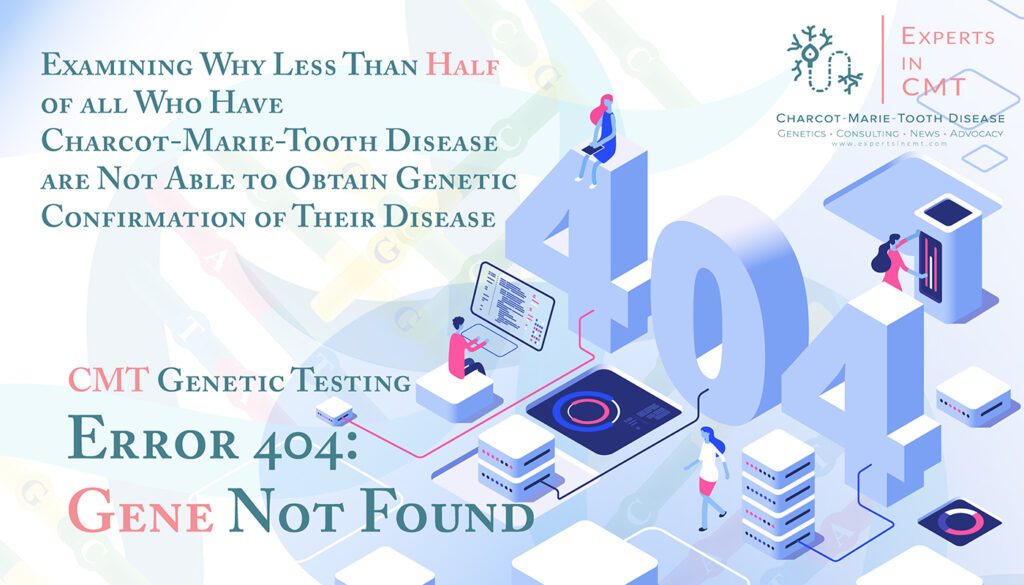
Error 404: Gene Not Found
CMT genetic testing often fails to identify the cause of the disease, even when comprehensive panels are used. Here, we discuss why this happens, what genetic tests can and cannot do, and why a negative result still matters.