dHMN-2A

HSPB8 | 2004

What Is dHMN-2A?

dHMN-2A is a type of CMT caused by autosomal dominant mutations in the HSPB8 gene. This gene provides instructions for making a small heat-shock protein that helps protect nerve cells from stress and clear damaged proteins. Mutations in the HSPB8 gene disrupt this function, leading to impaired nerve signal transmission.

dHMN-2A is autosomal dominant, meaning that just one of the gene’s two copies needs a mutation to cause this subtype.

Clinical Features

The age of symptom onset in dHMN-2A is variable, ranging from childhood to adulthood. Symptoms typically begin in the lower extremities and progress over time to involve the upper limbs. Nerve conduction studies usually show somewhat slowed conduction velocities and reduced amplitudes, consistent with an axonal form of CMT.

dHMN-2A symptoms may include:

  • Weakness in the feet and lower legs
  • Muscle atrophy
  • Foot drop
  • Reduced or absent reflexes
  • Reduced sensation
  • A steppage-style walking pattern
  • Foot deformities, including high arches, and hammertoes (clawed toes)
  • Progressive involvement of the hands and forearms
  • Difficulty with fine motor skills and manual dexterity
  • Additional symptoms not listed here

Disease Course

dHMN-2A shows wide variability in severity and progression. Some individuals are mildly affected, while others develop a more severe disease. Disease progression is generally slow, and life expectancy is not reduced.


Clinical Basics

Subtype
dHMN-2A

Classification
dHMN/HMN

Neuropathy Type
Axonal

Inheritance Pattern
autosomal dominant

Genetic Context

HGNC-Approved Gene Symbol
HSPB8

Gene Full Name
Heat Shock Protein Family B (small) Member 8

HGNC Gene Alias(es)
HSP22

Chromosome
12q24.23

Zygosity of Responsible Variant
Heterozygous

Variant Mechanism

Toxic Gain of Function (GoF)

Details

Mechanistic basis:
Neomorphic

Confidence:
Medium

Prediction:
The literature predicts a toxic gain-of-function mechanism for dHMN-2A: heterozygous HSPB8 variants (K141N/K141E) confer a novel aggregation-prone activity that impairs protein quality control, as shown in knock-in mice. Added wild-type HSPB8 is not predicted to rescue, and the recurrent missense alleles argue against haploinsufficiency, pointing to a neomorphic gain, though sequestration of partner chaperones keeps confidence at medium.

Rationale:
Recurrent HSPB8 K141N/K141E alleles acquire an aggregation-prone activity that impairs protein quality control, with knock-in mice affected and knockouts spared, so added wild-type is not predicted to rescue: a toxic gain of function. A dominant-negative contribution via sequestration of HSPB1 and BAG3 keeps confidence at medium.

ClinVar Pathogenic Variants

View dHMN-2A ClinVar Variants

dHMN-2A OMIM Entry

dHMN-2A OMIM

HSPB8 OMIM Entry

HSPB8 OMIM

More Info

dHMN-2A Research Opportunity

CMT Natural History Study

Original Discovery Publication

Publication Title

Hot-Spot Residue in Small Heat-Shock Protein 22 Causes Distal Motor Neuropathy

Authors

Irobi, J., Van Impe, K., Seeman, P., Jordanova, A., Dierick, I., Verpoorten, N., Michalik, A., De Vriendt, E., Jacobs, A., Van Gerwen, V., Vennekens, K., Mazanec, R., Tournev, I., Hilton-Jones, D., Talbot, K., Kremensky, I., Van Den Bosch, L., Robberecht, W., Van Vandekerckhove, J., Van Broeckhoven, C., … Timmerman, V.

Publication Date
May 2, 2004

Updated: July 18, 2026 | By: K. Raymond

The Dorsal Root

More From The Dorsal Root


Jean-Martin Charcot lecturing at the Salpêtrière while comparing anatomical illustrations of a cavovarus Charcot-Marie-Tooth (CMT) foot and a Charcot neuroarthropathy foot, highlighting two different conditions that share the Charcot name.


A Name That Does Too Much Work

Jean-Martin Charcot's name appears throughout medicine, but nowhere does it create more confusion than in the foot. Learn why the CMT foot and Charcot neuroarthropathy, also known as Charcot foot, share a name yet differ in how they develop, appear, and are managed.


Close-up of a doctor’s hand holding a prescription pad while a patient’s wrist is wrapped with metal chains.


When Medicine Lost Its Compass

Evidence failed not because it was wrong, but because it was weaponized. I lived the downstream effects of that failure for more than a decade. This is what happens when medicine forgets that data always ends in a human being.


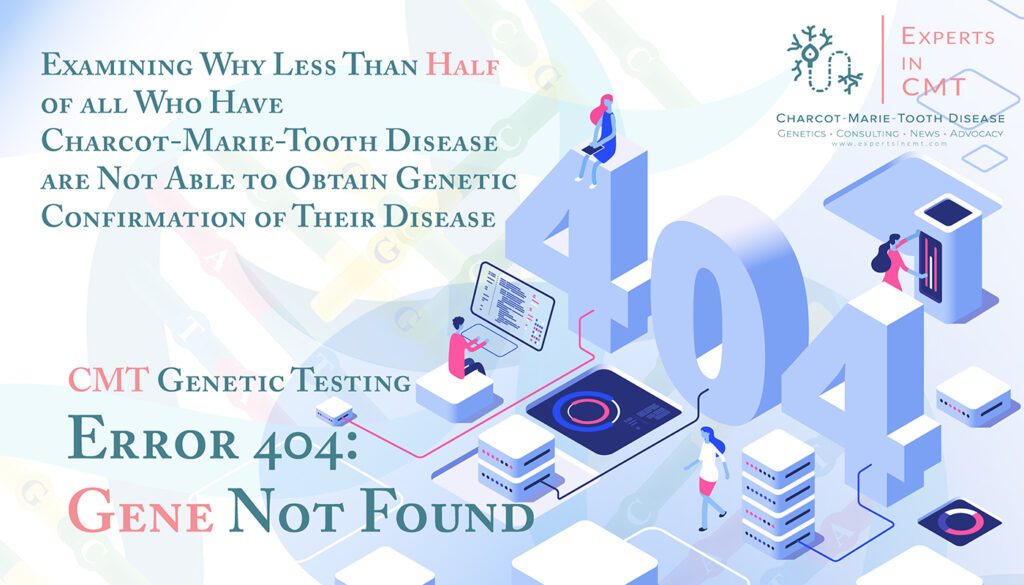
Illustrated graphic showing large ‘404’ numerals with people interacting with data screens and servers, alongside text reading ‘CMT Genetic Testing Error 404: Gene Not Found’ and ‘Examining Why Less Than Half of All Who Have Charcot-Marie-Tooth Disease Are Not Able to Obtain Genetic Confirmation of Their Disease.


Error 404: Gene Not Found

CMT genetic testing often fails to identify the cause of the disease, even when comprehensive panels are used. Here, we discuss why this happens, what genetic tests can and cannot do, and why a negative result still matters.