
Source
Proprioception - Charcot-Marie-Tooth Disease | Experts in CMT

Proprioception

Your Body’s GPS

Proprioception (proh-pree-oh-SEP-shun) is the body’s sense of its own position and movement, the reason you can tell where your arm is even with your eyes closed. It relies on receptors in the muscles, joints, and skin that constantly report back to the brain. In CMT, proprioception is often disturbed as the sensory nerves are affected, which contributes to balance problems and unsteadiness, and it can sometimes be improved with specialized therapy.

The Dorsal Root

More From The Dorsal Root


Jean-Martin Charcot lecturing at the Salpêtrière while comparing anatomical illustrations of a cavovarus Charcot-Marie-Tooth (CMT) foot and a Charcot neuroarthropathy foot, highlighting two different conditions that share the Charcot name.


A Name That Does Too Much Work

Jean-Martin Charcot's name appears throughout medicine, but nowhere does it create more confusion than in the foot. Learn why the CMT foot and Charcot neuroarthropathy, also known as Charcot foot, share a name yet differ in how they develop, appear, and are managed.

Close-up of a doctor’s hand holding a prescription pad while a patient’s wrist is wrapped with metal chains.


When Medicine Lost Its Compass

Evidence failed not because it was wrong, but because it was weaponized. I lived the downstream effects of that failure for more than a decade. This is what happens when medicine forgets that data always ends in a human being.


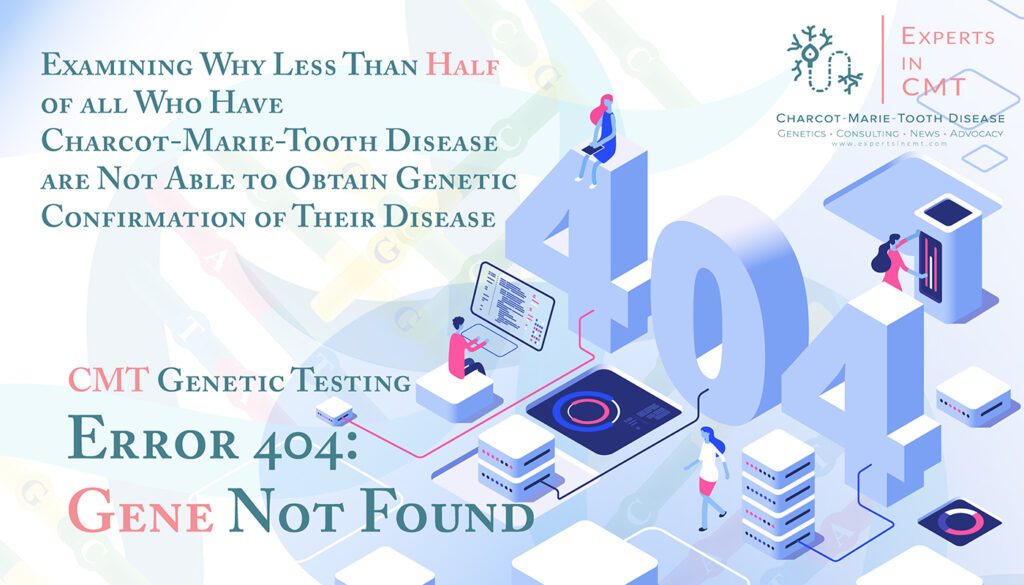
Illustrated graphic showing large ‘404’ numerals with people interacting with data screens and servers, alongside text reading ‘CMT Genetic Testing Error 404: Gene Not Found’ and ‘Examining Why Less Than Half of All Who Have Charcot-Marie-Tooth Disease Are Not Able to Obtain Genetic Confirmation of Their Disease.


Error 404: Gene Not Found

CMT genetic testing often fails to identify the cause of the disease, even when comprehensive panels are used. Here, we discuss why this happens, what genetic tests can and cannot do, and why a negative result still matters.